
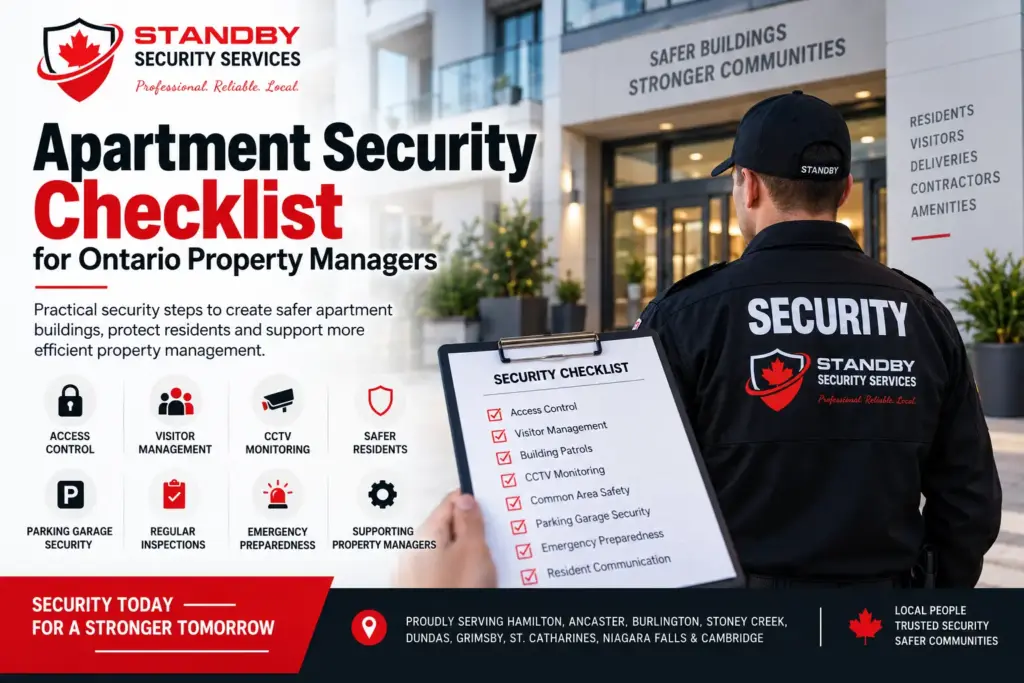
Managing an apartment building involves much more than maintaining the property and responding to maintenance requests. One of the most important responsibilities is creating a safe environment for residents, visitors, contractors, and staff.
Whether you oversee a small apartment complex or a large multi-building community, security should be reviewed regularly rather than only after an incident occurs.
A structured apartment security checklist helps property managers identify vulnerabilities, improve daily operations, and reduce potential risks before they become costly problems.
This guide outlines practical security considerations for apartment buildings across Ontario and provides a framework that property managers can adapt to their own properties.
Why Apartment Security Requires a Proactive Approach
Apartment buildings experience constant activity throughout the day.
Residents leave for work, visitors arrive, deliveries are made, contractors perform maintenance, and service providers access different areas of the property.
With so many people entering and leaving the building, relying solely on locks and surveillance cameras may not be enough.
A proactive security strategy helps property managers:
- Improve resident safety
- Monitor building access
- Support emergency preparedness
- Protect common areas
- Reduce unauthorized entry
- Improve incident reporting
- Maintain confidence among residents
Regular inspections also help identify issues before they affect building operations or resident satisfaction.
Common Security Challenges in Ontario Apartment Buildings
Every apartment property has its own layout and operational needs, but many face similar security challenges.
These may include:
- Unlocked entrances
- Tailgating through controlled access doors
- Poorly lit parking areas
- Unsecured package delivery locations
- Damaged security cameras
- Limited visitor verification
- Unauthorized access to amenity spaces
- Stairwell security concerns
- Vandalism
- Vehicle break-ins
- After-hours access issues
- Incomplete incident reporting
Addressing these issues through routine inspections and clear procedures can help improve the overall security of the property.
Why Property Managers Should Use a Security Checklist
A security checklist creates consistency.
Instead of relying on occasional observations, property managers can review key areas of the building using the same process each month or quarter.
This approach helps ensure that important items are not overlooked.
A well-organized checklist can assist with:
- Identifying maintenance concerns that affect security
- Reviewing access control procedures
- Evaluating lighting and visibility
- Monitoring visitor management practices
- Reviewing emergency preparedness
- Assessing common areas
- Supporting insurance and risk management discussions
- Planning future security improvements
The goal is not simply to react to incidents but to reduce the likelihood of them occurring in the first place.
Security Is More Than Cameras and Locks
Many people associate apartment security with surveillance cameras or electronic access systems.
While these technologies are valuable, they work best when combined with clear procedures and trained personnel.
An effective apartment security program may include:
- Controlled building access
- Visitor management procedures
- Routine security patrols
- Front desk or concierge support
- Well-maintained lighting
- Regular property inspections
- Incident reporting
- Emergency response procedures
- Communication between management and residents
Each element contributes to a safer and more organized living environment.
Learn more about our Residential Security Services:
https://standbysecurity.ca/security-services-hamilton/residential-security-services-hamilton/
Security Helps Protect More Than Property
Apartment security is not only about protecting buildings.
It also supports the people who live and work there.
An effective security program can help:
- Improve resident confidence
- Create a welcoming environment
- Support property management operations
- Assist emergency responders
- Protect shared amenities
- Reduce disruptions
- Encourage compliance with building policies
Residents are more likely to feel comfortable when security measures are visible, well managed, and consistently maintained.
Every Apartment Building Is Different
Security requirements vary depending on factors such as:
- Building size
- Number of residents
- Number of entrances
- Underground parking
- Shared amenities
- Visitor traffic
- Delivery volume
- Operating hours
- Property location
A high-rise apartment building in Hamilton may require different security measures than a smaller residential complex in Ancaster or Cambridge.
Because of these differences, security planning should always reflect the unique characteristics of each property.
Professional Security Can Support Property Management
Many apartment communities work with professional security teams to complement the efforts of property managers.
Depending on the building’s needs, services may include:
- Residential security officers
- Concierge security
- Front desk security
- Access control support
- Visitor management
- Mobile patrols
- Incident reporting
- Emergency response assistance
These services can help property managers maintain smooth day-to-day operations while providing residents with an additional level of support.
Explore our related services:
Residential Security Services Hamilton
https://standbysecurity.ca/security-services-hamilton/residential-security-services-hamilton/
Condominium Security Services Hamilton
https://standbysecurity.ca/security-services-hamilton/condominium-security-services-hamilton/
Who Should Use This Checklist?
This guide is designed for:
- Apartment property managers
- Residential property owners
- Building managers
- Condominium management companies
- Housing providers
- Real estate management firms
- Residential developers
- Community managers
Whether you’re reviewing an existing security program or planning improvements for a new property, this checklist can serve as a practical reference.
What You’ll Learn in This Guide
Over the next sections, we’ll walk through a comprehensive apartment security checklist, including:
- Exterior security inspections
- Building entrance security
- Parking lot and garage safety
- Lobby and common area security
- Visitor management procedures
- Access control best practices
- Emergency preparedness
- Operational security reviews
- Monthly security audit recommendations
The goal is to help property managers build a safer, more organized environment while supporting the long-term success of their residential communities.
Exterior Apartment Security Checklist
The exterior of an apartment building creates the first layer of protection for residents, visitors, contractors, and staff. It is also the area where many security concerns first become noticeable.
A well-maintained exterior can help discourage unauthorized access, improve visibility, and support safer day-to-day operations.
Rather than waiting for an incident to occur, property managers should regularly inspect the outside of the property using a structured checklist.
Below are the key areas that deserve regular attention.
1. Main Entrance Security
The main entrance is one of the busiest areas of any apartment building.
Residents, visitors, delivery drivers, contractors, and service providers all pass through this location throughout the day.
During inspections, consider checking:
✔ Entrance doors close and lock properly
✔ Access control systems operate correctly
✔ Intercom systems function as expected
✔ Entry doors are free from damage
✔ Building signage is clearly visible
✔ Entry areas remain well lit
✔ Cameras cover all entrances
✔ Emergency contact information is current
If your property experiences significant visitor traffic, professional residential security or concierge security can help support controlled access and visitor management.
Residential Security Services
https://standbysecurity.ca/security-services-hamilton/residential-security-services-hamilton/
Concierge Security Services
https://standbysecurity.ca/security-services-hamilton/concierge-security-services-hamilton/
2. Parking Lots and Underground Garages
Parking areas are often overlooked during routine inspections, yet they are among the most frequently used parts of a residential property.
Regular inspections should include:
✔ Adequate lighting throughout parking areas
✔ Security cameras covering vehicle entrances
✔ Clear directional signage
✔ Emergency exits remain accessible
✔ Pedestrian walkways are unobstructed
✔ Garage access doors close securely
✔ Parking gates operate correctly
✔ Suspicious blind spots are identified
✔ Emergency phones or call stations are operational where installed
A well-monitored parking area contributes to a safer environment for residents returning home during the evening or overnight hours.
3. Exterior Lighting
Lighting plays an important role in apartment security.
Poor visibility can make it more difficult for residents to navigate the property safely and may reduce the effectiveness of surveillance systems.
Review lighting around:
- Main entrances
- Side entrances
- Visitor parking
- Underground garage entrances
- Walkways
- Building perimeter
- Waste collection areas
- Loading zones
- Bicycle storage
- Amenity entrances
A simple monthly lighting inspection can help identify burned-out fixtures before they become larger concerns.
4. Perimeter Security
The perimeter of an apartment property should be inspected regularly to identify areas that may allow unauthorized access.
Property managers should review:
✔ Fencing condition
✔ Gates
✔ Exterior locks
✔ Access roads
✔ Pedestrian pathways
✔ Property boundaries
✔ Damaged barriers
✔ Graffiti or vandalism
✔ Areas hidden from public view
A secure perimeter helps support the overall safety of the property while reducing opportunities for unauthorized entry.
5. Landscaping and Visibility
Well-maintained landscaping is not only about appearance—it also contributes to security.
Trees, shrubs, and decorative plants should not block:
- Building entrances
- Security cameras
- Walkways
- Parking areas
- Exterior lighting
- Emergency exits
Maintaining clear sightlines improves visibility for residents, visitors, and security personnel.
6. Package Delivery Areas
Online shopping has significantly increased the number of daily deliveries received by apartment buildings.
Property managers should review whether:
✔ Delivery areas are clearly designated
✔ Packages are protected from unauthorized access
✔ Delivery personnel know where to report
✔ Residents can retrieve deliveries safely
✔ Cameras monitor package storage areas where appropriate
For buildings with frequent deliveries, concierge or front desk security can help manage visitor access while supporting organized package handling.
Front Desk Security Guard Services
https://standbysecurity.ca/security-services-hamilton/front-desk-security-guard-services-hamilton/
7. Waste Collection and Service Areas
Garbage and recycling areas often receive deliveries, maintenance visits, and contractor access.
During inspections, review:
✔ Gates and locks
✔ Exterior lighting
✔ Camera coverage
✔ Cleanliness
✔ Access routes
✔ Fire hazards
✔ Unauthorized storage
Keeping service areas organized helps improve both safety and operational efficiency.
8. Emergency Exits and Fire Routes
Emergency exits should always remain accessible.
Regular inspections should verify:
✔ Exit doors open without obstruction
✔ Exterior exit lighting functions properly
✔ Fire routes remain clear
✔ Emergency signage is visible
✔ Snow, ice, or debris does not block exits
✔ Exit hardware remains in good condition
Emergency access should never be compromised by parked vehicles, storage materials, or maintenance equipment.
9. Exterior CCTV Coverage
Security cameras are most effective when they cover key areas without significant blind spots.
Review camera coverage for:
- Main entrances
- Side entrances
- Parking lots
- Garage entrances
- Loading areas
- Visitor parking
- Building perimeter
- Mail and package areas
Property managers should also confirm that cameras are recording properly and that footage retention aligns with building policies.
10. Seasonal Exterior Inspections
Ontario weather changes throughout the year, and seasonal conditions can affect building security.
Spring and summer inspections may focus on:
- Landscaping growth
- Exterior lighting
- Parking lot markings
- Drainage
Fall and winter inspections should also include:
- Snow removal
- Ice accumulation
- Slip hazards
- Emergency exit accessibility
- Exterior lighting during shorter daylight hours
Adapting inspections to seasonal conditions helps maintain a safe environment year-round.
Exterior Security Supports Resident Confidence
Residents often notice the condition of the exterior before they enter the building.
Clean entrances, well-lit walkways, organized parking areas, and secure access points demonstrate that the property is actively maintained.
These visible measures help create a sense of safety while supporting the daily work of property managers.
StandBy Security supports residential communities across Southern Ontario, including:
Hamilton
https://standbysecurity.ca/hamilton/
Ancaster
https://standbysecurity.ca/security-services-ancaster/
Stoney Creek
https://standbysecurity.ca/security-services-stoney-creek/
Burlington
https://standbysecurity.ca/security-services-burlington/
Cambridge
https://standbysecurity.ca/security-services-cambridge/
By combining regular inspections with appropriate security procedures, property managers can strengthen the first layer of protection for their apartment communities.
Interior Apartment Security Checklist
Once residents and visitors enter the building, interior security becomes just as important as exterior protection.
Common areas experience constant activity throughout the day. Residents collect mail, visitors arrive, contractors perform maintenance, deliveries are made, and amenities remain in regular use.
A well-managed interior security program helps property managers maintain a safe, organized, and welcoming environment while supporting daily building operations.
The following checklist highlights key interior areas that should be reviewed regularly.
11. Lobby and Reception Area
The lobby is often the busiest location in an apartment building.
It serves as the primary access point for residents, visitors, contractors, and delivery personnel.
During routine inspections, verify that:
✔ Lobby entrances remain secure
✔ Access control systems function properly
✔ Visitor signage is visible
✔ Cameras cover all entry points
✔ Emergency contact information is displayed where appropriate
✔ Seating and waiting areas do not block exits
✔ Building directories are current
✔ Lighting provides clear visibility
A well-managed lobby creates a positive first impression while supporting resident safety.
12. Front Desk Operations
If your apartment building has a front desk, it should support both customer service and security.
A front desk security officer may assist with:
- Visitor registration
- Delivery coordination
- Contractor check-in
- Resident assistance
- Access verification
- Emergency communication
- Incident reporting
Property managers should regularly review:
✔ Visitor log procedures
✔ Contractor sign-in records
✔ Access card management
✔ Communication with building management
✔ Daily activity reports
Learn more about Front Desk Security Guard Services:
https://standbysecurity.ca/security-services-hamilton/front-desk-security-guard-services-hamilton/
13. Concierge Security Procedures
Many apartment communities choose concierge security because it combines professional customer service with security responsibilities.
Regular reviews should confirm that concierge officers follow established building procedures for:
✔ Visitor verification
✔ Resident assistance
✔ Delivery management
✔ Contractor access
✔ Emergency communication
✔ Building observations
✔ Incident documentation
Concierge security helps maintain an organized lobby while providing residents with a professional point of contact throughout the day.
Learn more:
https://standbysecurity.ca/security-services-hamilton/concierge-security-services-hamilton/
14. Visitor Management
Visitor management is an important part of apartment security.
Property managers should confirm that procedures exist for:
✔ Visitor registration
✔ Contractor verification
✔ Delivery personnel access
✔ Temporary visitor passes
✔ After-hours visitors
✔ Guest parking
✔ Building access authorization
Clear visitor procedures help reduce unauthorized entry while maintaining a smooth experience for legitimate guests.
15. Elevators and Elevator Lobbies
Elevators are high-traffic areas used throughout the day.
Routine inspections should include:
✔ Cameras operating where installed
✔ Emergency communication systems functioning
✔ Lighting working properly
✔ Access control features operating correctly
✔ Floor directories clearly displayed
✔ Elevator lobbies remain free from obstructions
Well-maintained elevators contribute to both resident safety and building accessibility.
16. Stairwells and Emergency Access Routes
Stairwells should never be overlooked during security inspections.
Review:
✔ Emergency lighting
✔ Exit signage
✔ Door hardware
✔ Cleanliness
✔ Unauthorized storage
✔ Camera coverage where applicable
✔ Accessibility of emergency exits
Stairwells should remain clear at all times to support emergency evacuation and daily safety.
17. Mailrooms and Package Storage
Package deliveries continue to increase across residential communities.
Property managers should regularly inspect:
✔ Package storage rooms
✔ Mailbox security
✔ Access restrictions
✔ Camera coverage
✔ Resident pickup procedures
✔ Delivery organization
✔ Signs of tampering or damage
Well-organized package areas help improve resident satisfaction while reducing the risk of misplaced or unauthorized access to deliveries.
18. Common Amenities
Shared amenities should receive the same level of attention as building entrances.
Review areas such as:
- Fitness centres
- Party rooms
- Meeting rooms
- Rooftop terraces
- Lounges
- Bicycle storage
- Storage lockers
- Children’s play areas
During inspections, verify:
✔ Access control systems operate correctly
✔ Cameras function where installed
✔ Emergency exits remain accessible
✔ Lighting is sufficient
✔ Furniture and equipment do not block exits
✔ Rules and emergency information remain visible
19. CCTV Monitoring Inside the Building
Interior cameras help property managers monitor activity in common areas while supporting incident investigations when necessary.
Review coverage for:
- Lobby
- Elevators
- Hallways
- Mailrooms
- Amenity spaces
- Parking access points
- Storage areas
Regularly confirm:
✔ Cameras are operational
✔ Recording systems function correctly
✔ Camera views remain unobstructed
✔ Equipment receives scheduled maintenance
CCTV works best when combined with trained security personnel who can respond appropriately when unusual activity is observed.
20. Hallways and Resident Floors
Resident floors should be included in every routine inspection.
Review:
✔ Lighting
✔ Emergency signage
✔ Fire doors
✔ Access-controlled doors
✔ Trip hazards
✔ Water leaks
✔ Damaged ceilings or walls
✔ Suspicious activity
Well-maintained hallways contribute to a safer and more comfortable living environment.
21. Access Control Systems
Electronic access systems should be reviewed regularly to ensure they continue supporting building security.
Property managers should verify:
✔ Key fobs function properly
✔ Lost credentials are deactivated promptly
✔ Access permissions are updated when residents move
✔ Contractor credentials are temporary
✔ Building staff permissions remain current
✔ Backup procedures are documented
Access control should evolve as resident occupancy and operational needs change.
22. Resident Communication
Good communication supports effective security.
Residents should know:
- How visitors are admitted
- Where to report concerns
- Emergency contact information
- Package procedures
- After-hours building access
- Building policies
Regular communication encourages cooperation and helps residents understand their role in maintaining a secure community.
Interior Security Supports Daily Building Operations
A secure apartment building depends on more than locked doors and surveillance cameras.
Consistent inspections, clear procedures, trained staff, and effective communication all contribute to safer daily operations.
Professional security services can further support property managers by assisting with visitor management, front desk operations, concierge services, patrols, and incident reporting.
Explore our related services:
Residential Security Services Hamilton
https://standbysecurity.ca/security-services-hamilton/residential-security-services-hamilton/
Condominium Security Services Hamilton
https://standbysecurity.ca/security-services-hamilton/condominium-security-services-hamilton/
Commercial Security Services Hamilton
https://standbysecurity.ca/security-services-hamilton/commercial-security-services-hamilton/
Operational Security Checklist for Property Managers
Strong apartment security depends on more than secure entrances and surveillance cameras. Day-to-day operational procedures play a major role in protecting residents, supporting staff, and helping property managers respond consistently to routine situations and unexpected incidents.
A well-documented operational security plan helps ensure that everyone involved understands their responsibilities and follows the same procedures.
Below are important operational areas every Ontario property manager should review regularly.
23. Security Patrol Procedures
Routine patrols help identify potential issues before they become larger problems.
Whether patrols are conducted by on-site security officers or mobile patrol teams, they should follow a documented schedule while remaining flexible enough to address changing conditions.
During monthly reviews, confirm:
✔ Patrol routes cover all common areas
✔ Parking garages are inspected
✔ Stairwells are included in patrols
✔ Building entrances are checked
✔ Exterior perimeter inspections are completed
✔ Amenity areas receive regular attention
✔ Patrol reports are submitted after each shift
✔ Any maintenance concerns are reported promptly
For many apartment communities, regular patrols complement front desk or concierge operations by extending security coverage beyond the lobby.
Learn more about our Residential Security Services:
https://standbysecurity.ca/security-services-hamilton/residential-security-services-hamilton/
24. Incident Reporting Procedures
Every apartment building should have a consistent process for documenting security-related events.
Accurate reporting helps property managers identify recurring issues, improve procedures, and maintain clear records.
Incident reports may include:
- Unauthorized access attempts
- Property damage
- Noise complaints
- Suspicious activity
- Medical emergencies
- Fire alarm activations
- Water leaks affecting security
- Parking disputes
- Visitor-related incidents
Each report should include:
✔ Date and time
✔ Location
✔ Description of the event
✔ Actions taken
✔ Individuals involved
✔ Follow-up recommendations
Consistent documentation supports informed decision-making and ongoing property management.
25. Contractor and Vendor Access
Apartment buildings regularly welcome contractors, maintenance teams, cleaning staff, utility providers, and inspection personnel.
To help maintain security, review:
✔ Contractor sign-in procedures
✔ Visitor identification requirements
✔ Temporary access credentials
✔ Escort requirements when applicable
✔ Completion of work before access expires
✔ Contractor contact records
✔ Access to restricted areas
Clearly defined procedures reduce confusion while helping maintain secure access throughout the property.
26. Move-In and Move-Out Security
Move-in and move-out days often create additional activity within apartment communities.
Property managers should have procedures for:
✔ Elevator reservations
✔ Delivery vehicle access
✔ Contractor coordination
✔ Temporary parking arrangements
✔ Resident identification
✔ Access card updates
✔ Building protection measures
✔ Common area inspections after the move
Planning ahead helps reduce disruptions for other residents while protecting shared spaces.
27. Emergency Preparedness
Every apartment property should maintain updated emergency procedures that are reviewed regularly.
These procedures may include:
- Fire response
- Medical emergencies
- Power outages
- Severe weather
- Water leaks
- Elevator malfunctions
- Gas leaks
- Building evacuations
Property managers should periodically verify:
✔ Emergency contact lists are current
✔ Staff understand reporting procedures
✔ Emergency exits remain accessible
✔ Communication plans are documented
✔ Emergency equipment is inspected
Preparedness improves coordination during unexpected situations.
28. Access Cards, Keys, and Credentials
Managing building access is an ongoing responsibility.
During routine reviews, verify:
✔ Lost access cards are deactivated
✔ Former residents no longer have active credentials
✔ Staff permissions remain current
✔ Contractor access expires when work is complete
✔ Master keys are stored securely
✔ Access records are maintained
Regular reviews help reduce the risk of unauthorized entry.
29. Resident Communication and Reporting
Residents often notice potential security concerns before anyone else.
Encourage residents to report:
- Damaged doors
- Burned-out lighting
- Suspicious activity
- Broken cameras
- Unauthorized visitors
- Unsafe conditions
- Parking concerns
Providing a clear reporting process encourages communication and helps property managers respond more efficiently.
30. Security and Maintenance Coordination
Many maintenance issues also affect building security.
Examples include:
- Broken locks
- Damaged fencing
- Faulty lighting
- Malfunctioning intercom systems
- Elevator issues
- Damaged security doors
- CCTV equipment requiring repair
Property managers should maintain communication between maintenance teams and security personnel so that issues affecting resident safety receive appropriate attention.
31. Reviewing Security Performance
Security procedures should be reviewed on a regular basis rather than remaining unchanged for years.
Questions property managers can ask include:
- Have there been recurring incidents?
- Are patrol schedules still appropriate?
- Are visitor procedures working effectively?
- Has resident feedback identified new concerns?
- Have building operations changed?
- Are additional security measures needed?
Regular reviews help ensure that security programs continue to meet the needs of the property.
32. Working with Professional Security Personnel
As apartment communities grow, operational demands often increase.
Professional security officers can support property managers by assisting with:
- Visitor management
- Concierge services
- Front desk operations
- Building patrols
- Incident reporting
- Emergency response procedures
- Resident assistance
- Contractor coordination
Depending on the property’s requirements, services can be tailored to match daily operations.
Related services:
Front Desk Security Guard Services Hamilton
https://standbysecurity.ca/security-services-hamilton/front-desk-security-guard-services-hamilton/
Concierge Security Services Hamilton
https://standbysecurity.ca/security-services-hamilton/concierge-security-services-hamilton/
Supporting Apartment Communities Across Southern Ontario
StandBy Security works with residential property managers throughout Southern Ontario, providing security solutions tailored to different building types and operational requirements.
Our teams support clients in:
Hamilton
https://standbysecurity.ca/hamilton/
Ancaster
https://standbysecurity.ca/security-services-ancaster/
Dundas
https://standbysecurity.ca/security-services-dundas/
Grimsby
https://standbysecurity.ca/security-services-grimsby/
St. Catharines
https://standbysecurity.ca/security-services-st-catharines/
Stoney Creek
https://standbysecurity.ca/security-services-stoney-creek/
Burlington
https://standbysecurity.ca/security-services-burlington/
Cambridge
https://standbysecurity.ca/security-services-cambridge/
Niagara Falls
https://standbysecurity.ca/security-guard-services-niagara-falls/
Whether managing a small apartment complex or a large residential community, consistent operational procedures contribute to safer and more efficient property management.
Monthly Apartment Security Audit Checklist
A structured monthly review helps property managers identify potential security concerns before they become larger operational issues.
While every property has different requirements, the checklist below provides a practical starting point that can be adapted to suit apartment buildings of different sizes throughout Ontario.
Building Exterior
✔ Main entrance doors close and lock properly
✔ Access control systems are functioning
✔ Exterior lighting is operational
✔ Parking lots are well illuminated
✔ Underground garage access points are secure
✔ Security cameras are recording properly
✔ Emergency exits remain accessible
✔ Building signage is visible
✔ Landscaping does not block sightlines
✔ Waste collection and service areas remain secure
Building Interior
✔ Lobby is monitored and organized
✔ Visitor management procedures are being followed
✔ Front desk or concierge operations are functioning effectively
✔ Hallways are well lit
✔ Stairwells remain free from obstructions
✔ Elevators are operating normally
✔ Mailrooms and package areas are secure
✔ Common amenities remain properly monitored
✔ CCTV cameras covering interior common areas are operational
✔ Access-controlled doors function correctly
Operational Review
✔ Security patrol reports have been reviewed
✔ Incident reports have been completed
✔ Maintenance issues affecting security have been addressed
✔ Contractor access records are current
✔ Resident access credentials remain accurate
✔ Emergency contact information has been updated
✔ Staff understand emergency procedures
✔ Visitor records are maintained
✔ Building policies are reviewed regularly
✔ Resident concerns have been documented and followed up
Completing this checklist on a regular schedule helps maintain consistency while supporting resident safety and efficient building management.
Frequently Asked Questions
How often should apartment security be reviewed?
Most apartment properties benefit from monthly security inspections, while high-traffic communities may require more frequent reviews of access control, visitor management, and common areas.
What areas should property managers inspect first?
Priority should typically be given to:
- Main entrances
- Access control systems
- Parking garages
- Building lighting
- Emergency exits
- Lobby and reception areas
- Stairwells
- Package rooms
- CCTV systems
These locations experience frequent activity and should be reviewed regularly.
Do apartment buildings need professional security guards?
Security requirements vary depending on the property’s size, layout, visitor traffic, and operational needs.
Many apartment communities choose professional security services to support:
- Visitor management
- Concierge operations
- Front desk security
- Mobile patrols
- Incident reporting
- Resident assistance
A tailored approach allows property managers to select services that match the needs of their building.
Learn more about our Residential Security Services:
https://standbysecurity.ca/security-services-hamilton/residential-security-services-hamilton/
What’s the difference between apartment security and condominium security?
Apartment buildings and condominiums often share similar security objectives, such as protecting residents, managing visitor access, and maintaining common areas.
However, condominium communities may have additional operational requirements based on board policies, owner expectations, and shared amenities.
Learn more:
https://standbysecurity.ca/security-services-hamilton/condominium-security-services-hamilton/
Should apartment buildings have concierge or front desk security?
Properties with regular visitor traffic often benefit from concierge or front desk security.
These services can assist with:
- Visitor registration
- Contractor access
- Package deliveries
- Resident assistance
- Building communication
- Access control
Choosing the right solution depends on the building’s daily operations and resident needs.
Learn more:
Concierge Security Services
https://standbysecurity.ca/security-services-hamilton/concierge-security-services-hamilton/
Front Desk Security Guard Services
https://standbysecurity.ca/security-services-hamilton/front-desk-security-guard-services-hamilton/
Can regular security inspections reduce operational risks?
Routine inspections help identify maintenance concerns, access control issues, lighting problems, and other conditions that may affect the safety and day-to-day operation of the property.
By addressing these issues early, property managers can improve building operations and support a safer environment for residents and visitors.
Related Resources
If you found this guide helpful, you may also be interested in these resources:
Why Property Managers Choose Professional Security Guards in Hamilton
https://standbysecurity.ca/why-property-managers-choose-professional-security-guards-in-hamilton/
Apartment Building Security – Best Practices
https://standbysecurity.ca/apartment-building-security-hamilton-best-practices/
How Residential Concierge Services Improve Safety
https://standbysecurity.ca/how-residential-concierge-services-improve-safety-hamilton/
Concierge Security vs Traditional Security Guards
https://standbysecurity.ca/concierge-security-vs-traditional-security-guards/
How Condo Boards Can Reduce Security Risks
https://standbysecurity.ca/how-condo-boards-can-reduce-security-risks-hamilton/
These articles provide additional guidance for property managers, condominium boards, and residential building owners who are reviewing or improving their security programs.
Final Thoughts
Apartment security is an ongoing process rather than a one-time project.
Regular inspections, clear procedures, well-maintained access control systems, and effective communication all contribute to a safer residential community. By following a structured security checklist, property managers can identify potential concerns early, improve daily operations, and create a more secure environment for residents, visitors, contractors, and staff.
Whether your property is a small apartment complex or a large multi-building community, reviewing security on a consistent basis supports better planning and long-term property management.
Professional security services can further strengthen these efforts by providing experienced personnel for visitor management, concierge support, front desk operations, patrols, and incident reporting tailored to the unique needs of each property.
Supporting Apartment Communities Across Southern Ontario
StandBy Security provides residential and property management security services for apartment communities throughout Southern Ontario, including:
- Hamilton – https://standbysecurity.ca/hamilton/
- Ancaster – https://standbysecurity.ca/security-services-ancaster/
- Dundas – https://standbysecurity.ca/security-services-dundas/
- Stoney Creek – https://standbysecurity.ca/security-services-stoney-creek/
- Burlington – https://standbysecurity.ca/security-services-burlington/
- Grimsby – https://standbysecurity.ca/security-services-grimsby/
- Cambridge – https://standbysecurity.ca/security-services-cambridge/
- St. Catharines – https://standbysecurity.ca/security-services-st-catharines/
- Niagara Falls – https://standbysecurity.ca/security-guard-services-niagara-falls/
We work with property managers, residential building owners, and condominium communities to develop security programs that align with each property’s operational requirements.
Contact StandBy Security
If you’re reviewing your apartment building’s current security program or planning security for a new residential property, our team is available to discuss your requirements.
Phone: +1 289 309 3633
Email: info@standbysecurity.ca
Website: https://standbysecurity.ca/
We can help assess your property’s operational needs and recommend residential security, concierge security, front desk security, or condominium security services that support safe and well-managed communities across Southern Ontario.
Reviewed by the StandBy Security operations team. Last reviewed: .